
For the show that’s on before your shoes are off.
Anywhere But Here
What are you really reaching for?
What it helps you do
- Name the exact door you take. “My phone” is a building, not a door
- Find the hour it keeps, and what happened two minutes before
- See what it pays you in the first five minutes
- Notice what it lets you not think about
- Spot the next door your hand goes to when this one is closed
- Name the job it’s been doing for you
- Then choose: keep it on purpose, find a better door, or go back to the room
If the file won’t open or isn’t what this page describes, you get a new file or a full refund.
Look inside first
One door, traced
A show is on before her shoes are off.
Leah, 37, works in HR. The Guide follows her one door through all nine questions. These are her answers.
- The door
“A show. On before my shoes are off. Usually something I’ve already seen.”
- The moment
“Weekdays at 6:15, right as the front door closes behind me.”
- Just before
“A hard conversation at work. I’m in HR. Some days I have three before lunch.”
- The pay
“Voices that aren’t upset with anyone. And a story where I already know the ending.”
- The quiet
“The conversations. I keep replaying what I should have said.”
Then the next door, what comes back when she skips it, and the job it’s been doing.
- A month later
“I still watch. But now I take my shoes off first, and I know what it’s for.”
The door was never the point. The job was.
From page 9 of the Guide
Use it when
- Videos at 10 p.m.
- The fridge, opened without hunger.
- The news, again, after an email with a tone.
- A podcast before the shower.
- Just one more check before bed.
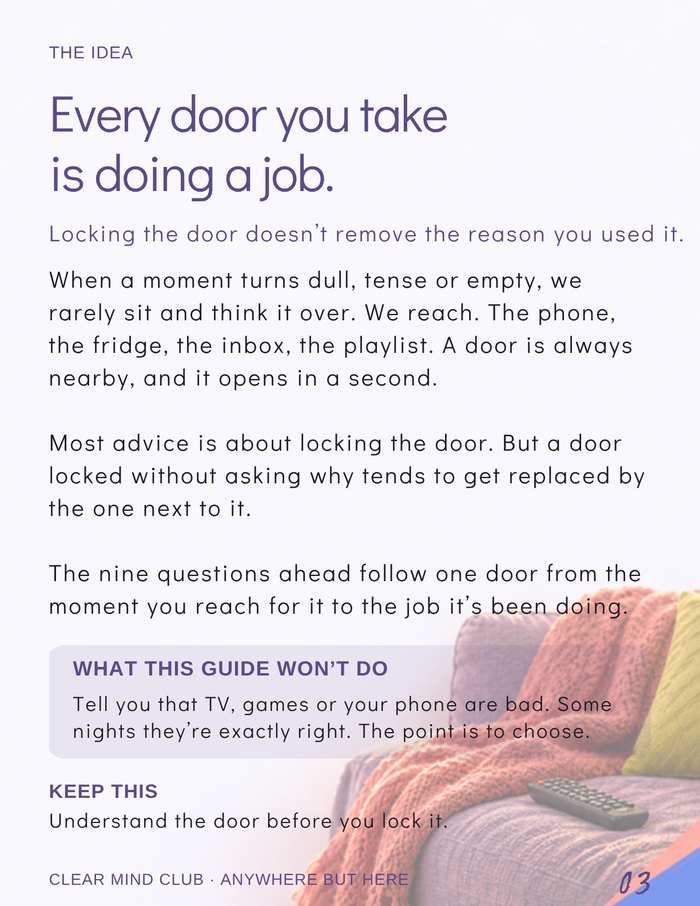
Every door you take is doing a job.
When a moment turns dull, tense or empty, we rarely sit and think it over. We reach. A door is always nearby, and it opens in a second. Most advice is about locking the door. But a door locked without asking why tends to get replaced by the one next to it. The nine questions follow one door from the moment you reach for it to the job it’s been doing.
Keep thisUnderstand the door before you lock it.
Look inside
Real pages from the Guide, so you can judge it before you buy.
Part two · The trade
What goes quiet?
Every door you walk through closes another one.
While the show is on, something else gets turned down: the replay of a conversation, a decision you’re putting off, a worry with no answer yet, plain tiredness.
This is the part we rarely say out loud. Putting off an unpleasant feeling brings real relief in the short run. That’s exactly why it’s worth seeing clearly.
Example
“The conversations. I keep replaying what I should have said.”
Clear Mind Club · Anywhere But Here8

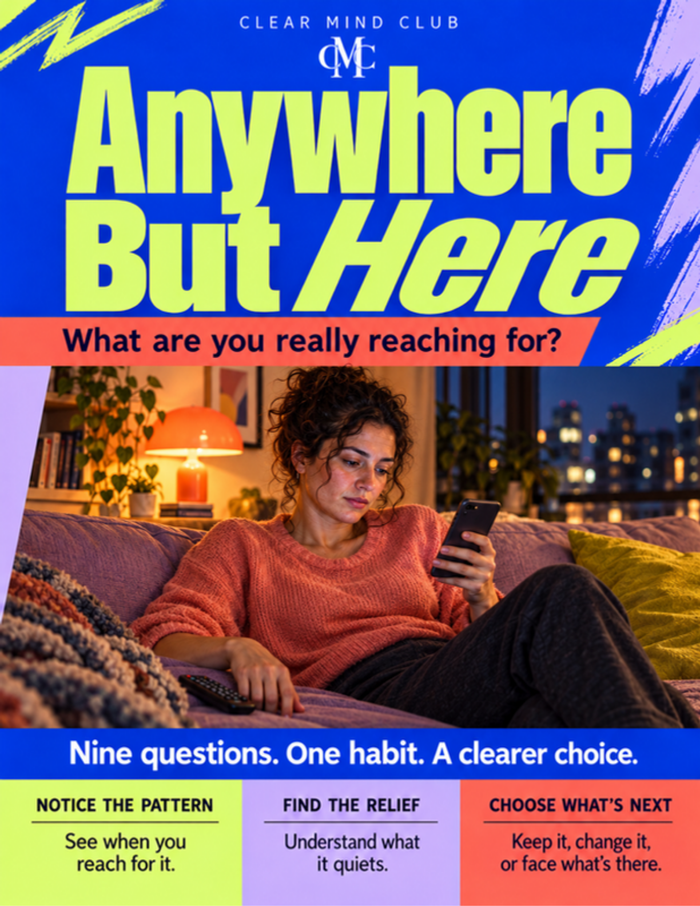
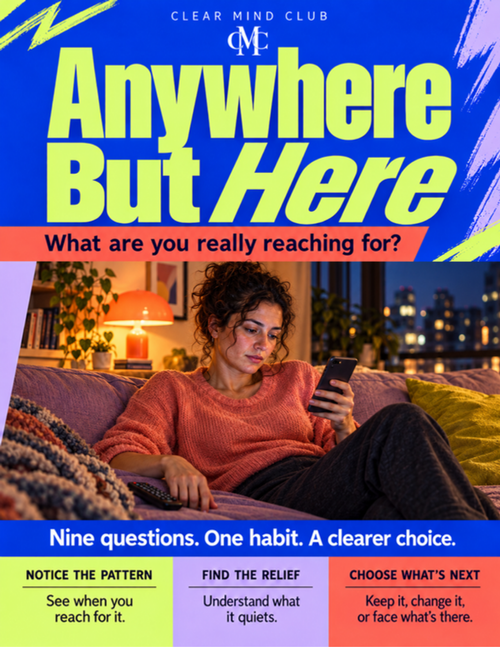
The cover 
The idea 
Pick one door 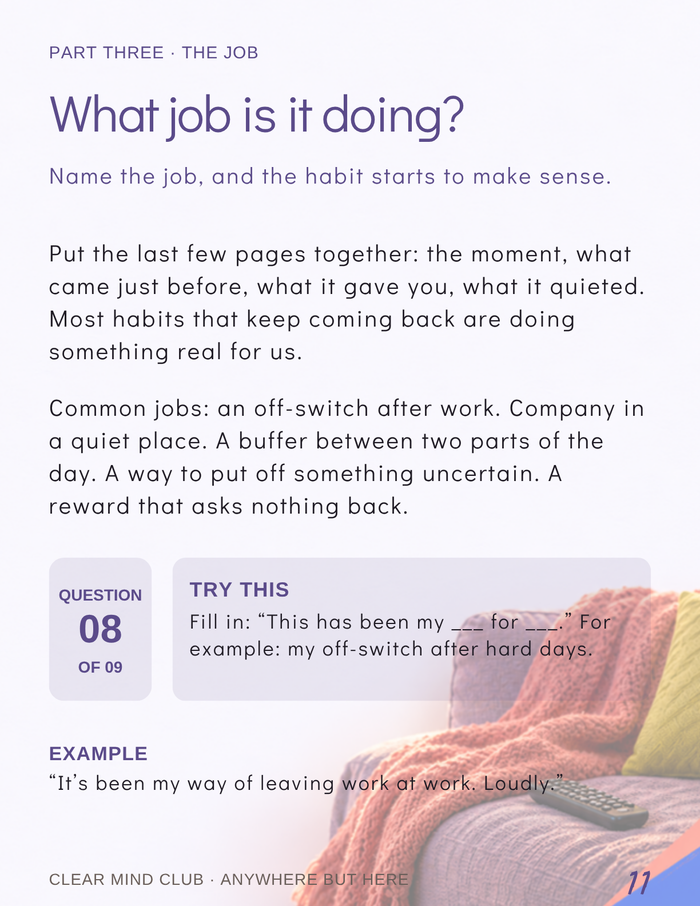
Question 8: what job is it doing? 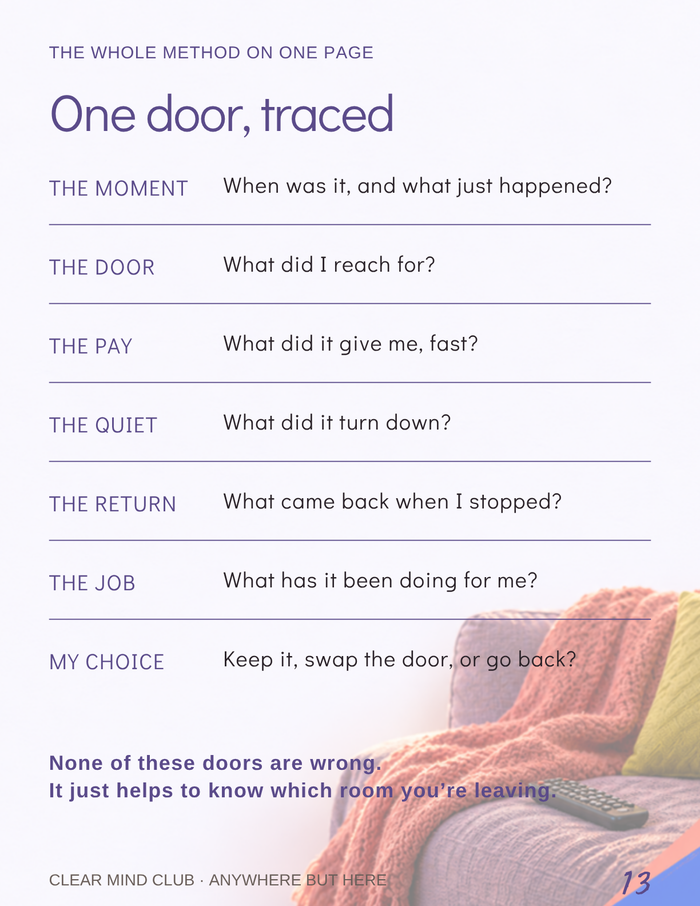
The map: one door, traced

Nine questions, one door
- 01What do you reach for?
- 02When does it happen?
- 03What just happened?
- 04What does it give you?
- 05What goes quiet?
- 06Which door is next?
- 07What comes back?
- 08What job is it doing?
- 09What would you choose?
Also in the file
- Before you begin: how to pick one door
- Leah’s answers to all nine questions, as a worked example
- The map: the whole method on one page
- A note on care, for when a habit is more than ordinary
- The five main sources, printed at the back
Each idea was checked against published work, and the five main sources are printed at the back with authors and years, so you can check them yourself.
Why not just read free tips?
One door, followed all the way
Not a list of tips. Nine questions follow a single habit from the moment you reach for it to the job it’s been doing, with a worked example on every page.
It doesn’t start with quitting
Most advice is about locking the door. A door locked without asking why tends to get replaced by the one next to it. The Guide asks why first.
You can check it
The five main sources are printed at the back with authors and years.
Want to hear the voice first? The Notes are free and written the same way.
What you’re not getting
No digital detox, no app blocker, no 30-day challenge. The Guide won’t tell you that TV, games or your phone are bad. Some nights they’re exactly right. The point is to choose.
Not therapy and not a diagnosis. It’s for ordinary habits. If something feels out of your control, or affects your health, sleep, eating, money or relationships, the Guide itself says to talk to a doctor or licensed therapist.
Not a promise that you’ll stop. You’ll see one habit clearly, and then the choice is yours.
What happens after you pay
- Check out as a guest. No account needed.
- The download link appears on the confirmation page and arrives by email, usually within a minute.
- Open it on your phone, tablet or laptop. It’s an ordinary PDF, and it’s yours to keep.
For the show that’s on before your shoes are off.
Anywhere But Here · $19.00 · instant download, yours to keep
If the file won’t open or isn’t what this page describes, you get a new file or a full refund.
Read the full description
Leah, 37, works in HR. Most evenings, a show is on before her shoes are off. Usually something she’s already seen. This Guide follows that one ordinary habit from the moment she reaches for it to the job it has been doing for her, and then helps you do the same with yours.
Every door you take is doing a job
When a moment turns dull, tense or empty, we rarely sit and think it over. We reach. The phone, the fridge, the inbox, the playlist. A door is always nearby, and it opens in a second. Most advice is about locking the door. But a door locked without asking why tends to get replaced by the one next to it. This Guide asks why first: understand the door before you lock it.
Nine questions, one door
Each question is one page: a short idea, one thing to try, and Leah’s answer as an example.
- What do you reach for?
- When does it happen?
- What just happened?
- What does it give you?
- What goes quiet?
- Which door is next?
- What comes back?
- What job is it doing?
- What would you choose?
Also inside
- Before you begin: how to pick one door, specific enough to follow (“my phone” is a building, not a door)
- A worked example: Leah’s answers to all nine questions, from 6:15 at the front door to a month later
- The map: the whole method on one page, to use the next time the reach comes
- The five main sources at the back, with authors and years, so you can check the ideas yourself
Who it is for
Anyone who finds the show, the feed, the news or the fridge already open before they decided to open it, and wants to understand that habit instead of fighting it. It is short enough to read in one sitting, and made to be answered in writing over one week. No background in psychology is needed.
Who it is not for
This is the honest part. Please do not buy it if:
- you want a digital detox, an app blocker or a 30-day challenge; this Guide won’t tell you that TV, games or your phone are bad
- a habit feels out of your control, or affects your health, sleep, eating, money or relationships; the Guide itself says to talk to a doctor or licensed therapist, and so do we
- you want a quick fix; the point is to see one habit clearly, then choose
We would rather you keep your money than buy the wrong thing.
Straight answers
How does it reach me? The download link appears on the confirmation screen the moment your payment goes through, and arrives by email at the same time.
Can I read it on my phone? Yes. It is an ordinary PDF and opens in any reader on a phone, tablet, laptop or e-reader. The pages are US Letter, so they read fine on a phone; turning it sideways just makes the type bigger.
What if something goes wrong? Digital files cannot be returned, so sales are final once delivered. If the file won’t open, is corrupted, or isn’t what this page described, write to hello@readclearmind.com and we’ll replace it or refund you in full.
This guide is for reflection and learning. It is not a diagnosis, not therapy, medical advice or treatment, and not a substitute for care from a qualified professional. If something in your life is persistent, severe, or affecting your daily functioning, please speak to a doctor or a mental health professional.
Free to read
Not ready? Start with a free Note.
Each of these ends on a question this Guide goes on to answer.